

Restaurant Culinary Recruitment: Chefs, Pastry & BOH Leaders
Culinary recruitment is fundamentally different from hiring for most restaurant positions.
Recruiting for positions like Executive Chef or Pastry Chef means selecting leaders who will influence menu development, food safety, kitchen culture, and long-term performance across the entire restaurant. These hires impact far more than daily service, as they shape consistency, cost control, staff retention, and the guest experience.
As consumer restaurant spending continues to fluctuate and competition increases across restaurant types, culinary hiring has become more complex. This makes disciplined culinary recruitment a business necessity, not an operational afterthought.
Effective culinary recruitment in the restaurant industry requires more than filling open roles quickly. It depends on several key factors and a recruitment process aligned with menu complexity, kitchen equipment, design needs, and more. Restaurants then must assess culinary expertise alongside management skills, business acumen, and the ability to lead diverse culinary cultures, from the classic French cuisine to fast-growing, multi-unit concepts.
In this guide, we’ll outline best practices for restaurant culinary recruitment, with a focus on hiring chefs, pastry chefs, and back-of-house leaders who can support training, performance, and inventory management, menu planning, customer service, and long-term growth.
We’ll also explain how working with a hospitality recruitment specialist like Patrice & Associates helps restaurants strengthen employer branding, improve the candidate experience, and build culinary teams that endure.
The Current State of Culinary Recruitment in the Restaurant Industry
From casual concepts to Michelin-starred kitchens, operators face increasing pressure to build stable, high-performing culinary teams. Rising labor requirements, tighter labor laws, and evolving expectations around schedules, training, and workplace culture have made traditional food service staffing approaches less effective.
According to data frequently cited by the Bureau of Labor and industry analysts such as Statista.com, back-of-house turnover remains one of the most persistent challenges in the restaurant industry, particularly among cooks and specialized station cooks.
Why Culinary Hiring Is Different From General Restaurant Staffing
Culinary restaurant recruitment requires a different approach from general restaurant staffing because:
- Hierarchical kitchen structures: Culinary teams rely on clearly defined leadership roles. Many restaurants still operate within a Brigade de Cuisine framework, where authority flows from the Executive Chef or Head Chef to sous chefs, then to chef de partie, and finally to the broader kitchen staff.
- Higher technical and operational responsibility: Chefs and BOH leaders oversee inventory management, food safety compliance, equipment usage, and sanitary practices, not just cooking.
- Leadership and staff management skills expectations: Strong culinary candidates must manage team sizes, develop training schedules, support cross-training, and maintain morale under pressure.
- Concept and restaurant type alignment: Experience must match menu complexity and service style. A chef from Michelin-starred kitchens may struggle in a high-volume casual restaurant, while leaders from streamlined concepts may lack experience with advanced menu planning and plating.
- Long-term business impact: Poor culinary hires often result in inconsistent execution, higher turnover among cooks, food cost overruns, increased operational risk, and ultimately worse customer service.
Successful culinary restaurant recruitment aligns culinary background, qualifications, and management skills with the restaurant’s concept, kitchen design, and operational goals, which is why hiring within this system requires precision rather than volume-based food service staffing.
Post-Pandemic Shifts in Chef and Kitchen Staff Hiring
The post-pandemic labor market has significantly reshaped how restaurants recruit chefs, sous chefs, and kitchen staff. Experienced culinary professionals have become more selective, placing greater emphasis on structure, leadership support, and long-term sustainability rather than short-term compensation alone.
The most impactful post-pandemic shifts in culinary hiring include:
- Increased candidate selectivity: Chefs and BOH leaders now prioritize work-life balance, predictable training schedules, and professional development opportunities.
- Greater expectations for process and transparency: Candidates expect clear job descriptions, structured formats for interviews, defined recruitment processes, and consistent communication throughout candidate screening.
- Stronger focus on onboarding and training: Organized employee onboarding platforms, clear training materials, and cross-training programs are viewed as indicators of strong management and long-term opportunity.
- Expanded role of performance incentives: Performance-based bonuses, advancement pathways, and leadership development opportunities increasingly influence acceptance decisions.
- Digital-first sourcing behavior: Culinary professionals actively engage with specialized recruiters, platforms like Culinary Agents, digital job boards, LinkedIn, and Instagram, using social media to evaluate kitchen culture and employer branding before applying.
Restaurants that fail to adapt to these shifts often lose qualified candidates early in the process, while those that invest in clarity, structure, and candidate experience gain a competitive advantage in culinary recruitment.
Culinary Talent Shortages and Operational Risk
Ongoing shortages of experienced culinary leaders present a real risk to restaurant operations. Weak leadership at the chef or sous chef level often leads to gaps in food safety certifications, inconsistent sanitary practices, and poor performance management.
These issues directly affect inventory control, menu execution, and customer service.
The risk is amplified in restaurants with larger team sizes, complex menus, or multiple locations. Without disciplined culinary leadership, training schedules become inconsistent, staff morale declines, and turnover increases. Over time, these challenges affect market shares, brand perception, and financial performance.
Restaurants that take a strategic approach to culinary recruitment, aligning qualifications, management capability, and culinary expertise with operational needs, are better equipped to reduce risk and build resilient kitchen teams.

Defining Culinary Roles Clearly — Job Descriptions That Attract the Right Talent
A clear role definition is the foundation of effective culinary recruitment. Before posting jobs or conducting interviews, restaurants must understand exactly what each culinary role is responsible for and how it fits into the broader kitchen structure.
Well-defined culinary roles help attract candidates whose culinary background, management skills, and career goals align with the restaurant’s menu complexity, service model, and team size.
Why Precision Matters in Culinary Job Descriptions
Culinary job descriptions must balance technical expectations with leadership and operational responsibilities. Unlike general food service staffing, culinary roles often combine hands-on execution with staff management, training, and compliance oversight.
When these expectations are unclear, even highly qualified chefs can struggle to succeed.
Effective culinary job descriptions should clearly communicate:
- The scope of responsibility, including leadership over kitchen staff, cooks, or specialized station cooks
- Expectations related to inventory management, food safety, and sanitary practices
- The level of involvement in menu development and food product sourcing
- Required qualifications, diplomas, certifications, or food safety certifications
- Management responsibilities such as training schedules, performance management, and cross-training
When written thoughtfully, job descriptions also support performance management after the hire, serving as a reference point for training materials, onboarding platforms, and long-term development planning.
Executive Chef and Head Chef Roles
The Executive or Head Chef serves as the strategic and operational leader of the kitchen, combining culinary expertise with business acumen. This role has a direct influence on menu execution, food safety, ingredient sourcing, inventory management, staff performance, and the overall guest experience.
- Core responsibilities and expectations: Executive Chefs and Head Chefs are responsible for menu development, recipe standards, and consistent execution across all services. They oversee inventory management, food cost controls, kitchen equipment usage, and compliance with food safety regulations and sanitary practices. This role also carries full accountability for leading the culinary team, including sous chefs, commis chefs, and specialized station cooks, while collaborating with ownership or senior management on budgeting, labor planning, and performance outcomes tied to the restaurant business.
- Required skills and competencies: Successful candidates demonstrate culinary expertise aligned with the restaurant’s concept, pricing strategies, and menu complexity, and are constantly aware of the latest culinary trends, whether in casual dining or Michelin-starred kitchens. Strong management skills are essential, including staff management, performance management, and corrective coaching. Executive Chefs must also be capable of designing and maintaining training schedules, training materials, and onboarding systems while leading calmly and decisively during high-pressure service periods, requiring exceptional communication skills.
- Experience and qualification requirements: Experience should reflect the restaurant type and operational scale, including leadership over larger team sizes and multi-station kitchens. Relevant culinary backgrounds, diplomas, certifications, or formal training may be required depending on the concept. Candidates should also have working knowledge of labor laws, labor requirements, scheduling regulations, and compliance standards that affect kitchen operations.
Sous Chef and BOH Leadership Positions
Sous chefs act as the operational backbone of the kitchen, ensuring that standards set by the Executive or Head Chef are executed consistently across every shift. This role is central to daily performance, training continuity, and kitchen staff morale.
- Core responsibilities and expectations: Sous chefs supervise cooks and specialized station cooks during prep and service, enforce food safety standards, and maintain sanitary practices throughout the kitchen. They manage daily execution, including prep flow, equipment usage, and production planning, while supporting inventory management and acting as the on-shift leader when senior culinary leadership is unavailable.
- Required skills and competencies: Strong hands-on culinary ability is essential, along with a strong work ethic and organizational discipline to manage stations, timing, and priorities under pressure. Sous chefs must support onboarding platforms, cross-training efforts, and training schedules, while providing ongoing coaching and informal performance management. Clear communication skills and the ability to translate leadership expectations to kitchen staff are critical to success in this role.
- Experience and advancement considerations: Candidates should have prior leadership or lead-line experience in comparable restaurant environments and familiarity with structured kitchen systems. Because this role often serves as a pipeline to Head Chef positions, demonstrated readiness for advancement and leadership growth is a key consideration in the recruitment process.
Pastry Chef and Specialized Culinary Roles
Pastry chefs and specialized culinary professionals require a targeted recruitment approach due to the technical precision, production planning, and creative consistency their roles demand. These positions often play a defining role in guest perception and menu identity.
- Core responsibilities and expectations: Pastry Chefs are responsible for designing and executing desserts or specialty food products, managing production timelines, and ensuring consistency at required volumes. They oversee pastry-specific equipment and workspaces, inventory management, collaborate with Executive Chefs on menu development, and maintain strict adherence to food safety standards relevant to production environments.
- Required skills and technical expertise: Candidates must demonstrate advanced specialty skills, work ethic, precision in execution, and the ability to maintain quality at scale. Strong attention to detail, presentation, design, and flavor balance is essential, along with the ability to train or support junior pastry staff when applicable.
- Qualifications and experience requirements: Formal pastry training, diplomas, certifications, or specialized education may be required, depending on the restaurant type. Experience should align with the concept, whether boutique dining or high-volume production, and include familiarity with equipment and processes specific to pastry or specialty operations.
Aligning Culinary Roles
Culinary recruitment is most successful when job descriptions reflect the realities of the restaurant’s concept.
Aligning culinary roles with restaurant type means accounting for menu complexity, kitchen design, equipment limitations, and expected customer service pace. When job postings accurately reflect these realities, they attract candidates who are prepared to succeed in the environment rather than adapt after the fact.
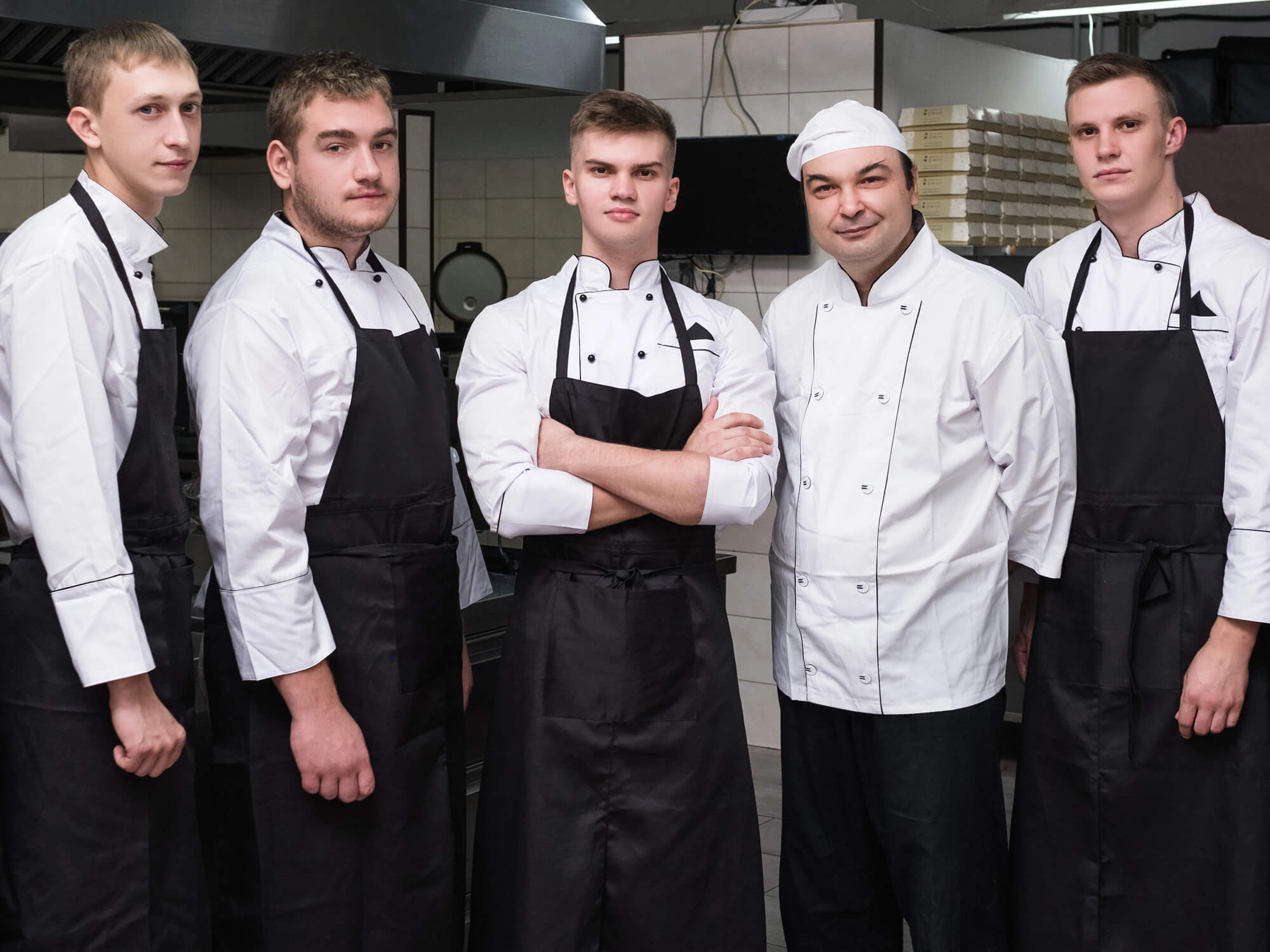
Recruiting Strategies for Hiring Chefs & BOH Leaders
Recruiting chefs and back-of-house leaders requires a fundamentally different approach than general food service staffing. Because experienced culinary professionals are often passive candidates and highly selective, restaurant recruitment processes must rely on intentional, relationship-driven recruiting strategies rather than volume-based job advertising alone.
The most successful culinary recruitment strategies combine alignment, expertise, and access, particularly when restaurants partner with recruiting specialists who understand the realities of kitchen leadership and restaurant operations.
Align Recruiting Strategy With Restaurant Type and Menu Complexity
Effective culinary recruitment begins with alignment between the role and the restaurant’s operational reality.
Recruiting strategies must reflect restaurant type, menu complexity, culinary culture, and kitchen structure. For example:
- High-volume restaurants require chefs experienced in efficiency, consistency, and staff coordination across large team sizes.
- Fine-dining or Michelin-starred kitchens demand leaders with refined technique, classical training, and experience executing complex menus.
When recruiting strategies fail to account for factors, restaurants risk hiring technically skilled chefs who are nonetheless poorly suited to the environment. Strategic alignment at the outset improves candidate screening, interview accuracy, and long-term retention.
Why Recruiting Specialists Are a Top Strategy for Culinary Hiring
One of the most effective strategies for hiring chefs and BOH leaders is partnering with a recruitment firm that specializes in restaurant and hospitality talent. Culinary restaurant recruiting specialists bring industry knowledge, established networks, and structured processes that most restaurants cannot replicate internally.
Recruiting specialists like Patrice & Associates focus on identifying passive candidates—Executive Chefs, Commis Chefs, Sous Chefs, and Pastry Chefs who are not actively applying to job postings but are open to the right opportunity. These professionals are often already employed, selective, and difficult to reach through traditional sourcing methods.
Working with a specialized recruiter supports culinary recruitment by:
- Providing access to a broader and more qualified talent pool
- Conducting in-depth candidate screening beyond resumes
- Evaluating culinary expertise alongside work ethic, communication skills, management skills, and overall cultural fit
- Managing confidential searches for leadership or replacement roles
- Reducing time-to-hire while improving placement quality
Because recruiting specialists understand restaurant operations, labor requirements, and culinary career paths, they help restaurants avoid costly mis-hires and strengthen long-term team performance.
Leveraging Employer Branding Without Relying on Job Boards Alone
Employer branding remains an important component of culinary recruitment, but it is most effective when supported by professional recruiting outreach rather than dependent on job boards alone. While the digital visibility that comes from hyperlocal job ads and social media presence helps reinforce credibility, experienced chefs rarely base career decisions solely on online postings.
Recruiting specialists help translate employer branding into meaningful conversations with candidates by clearly communicating leadership expectations, kitchen culture, and growth opportunities.
This human-centered approach improves the candidate experience and positions the restaurant as a serious, well-managed operation rather than just another listing.
Writing Job Postings That Support, Not Replace, Strategic Recruiting
As already established, job postings still play a role in the recruitment process, but they function best as support tools rather than primary sourcing mechanisms. Clear, well-written job descriptions help align expectations, guide interviews, and reinforce professionalism once candidates are engaged through recruiter outreach.
Creating a Professional, Consistent Candidate Experience
Culinary professionals assess restaurants based on how they are treated throughout the hiring process. Structured communication, respectful scheduling, and transparency during interviews signal strong management and operational maturity.
Recruiting specialists help maintain consistency across the candidate experience by coordinating interviews, setting expectations, and ensuring timely feedback. This level of professionalism not only improves offer acceptance rates but also protects the restaurant’s reputation within tight-knit culinary communities.
Interviewing and Selection Best Practices for Culinary Roles
Once candidates are engaged, the interview and selection process becomes the most critical stage of culinary recruitment. Kitchens are high-pressure environments, and hiring decisions must account for both technical ability and leadership behavior.
A structured, fair, and role-specific interview process improves hiring accuracy and reduces costly mis-hires.
Designing a Structured Culinary Interview Process
Structured interviews provide consistency and allow hiring teams to evaluate candidates objectively. For culinary roles, this means:
- Combining technical assessment with behavioral questions to understand how candidates lead, communicate, and manage pressure.
- Interview frameworks should be tailored to the role level.
- Clear structure ensures that all candidates are evaluated against the same standards, supporting fair selection and better long-term outcomes.
Evaluating Culinary Expertise Beyond the Resume
Resumes alone rarely capture the full picture of a chef’s ability. Practical assessments, when appropriate, provide insight into execution, organization, and composure.
- These may include tasting sessions, working interviews, or structured discussions around past menu development and kitchen management experiences.
- Evaluations should reflect real job conditions rather than staged perfection.
Observing how candidates approach equipment, communicate with kitchen staff, and adapt to constraints offers valuable insight into their readiness for the role.
Assessing Leadership, Management Skills, and Cultural Fit
Culinary leadership failures often stem from behavioral misalignment rather than technical gaps. Behavioral interviewing helps identify how candidates handle conflict, train teams, manage performance, and maintain standards under pressure.
Questions should explore:
- Prior staff management experience
- Approaches to cross-training
- Handling underperformance
- Navigating labor requirements.
Cultural alignment is especially important in kitchens with established culinary identities or strong leadership hierarchies. Selecting candidates whose values and communication skills align with the existing team improves retention and performance.
Making Confident, Documented Hiring Decisions
Final selection decisions should balance technical competence, leadership potential, and cultural fit. Documenting interview feedback and assessment outcomes supports better decision-making and reduces bias, and applicant tracking systems are some of the best tools out there for this purpose.
Clear communication with candidates throughout this stage reinforces professionalism and strengthens employer branding. Even candidates who are not selected leave with a lasting impression that influences reputation within culinary networks and digital platforms.

Onboarding, Training & Retaining Culinary Talent
A successful culinary team hinges not only on recruiting the right talent but also on effectively onboarding and training them. This crucial process ensures that new hires are seamlessly integrated into the kitchen environment and are equipped for long-term success, ultimately impacting retention rates and overall team performance.
Why Culinary Onboarding Impacts Retention
The initial 30–90 days of a new hire’s journey can be a make-or-break period that significantly influences their decision to stay with an organization. A structured onboarding process aligns expectations early, reducing uncertainty and setting a positive tone.
Establishing clear roles, responsibilities, and cultural norms during this period can lead to higher job satisfaction and lower turnover.
Role-Specific Culinary Training Programs
Tailored training programs address the unique needs of different kitchen roles and ensure that all staff members contribute effectively to the culinary team:
- Executive & Head Chefs: Focused on strategic skills such as menu development, supply, and food cost control, and leadership expectations, enabling them to drive the kitchen’s vision and business goals.
- Sous Chefs & BOH Leaders: Training emphasizes station oversight and staff training, key areas that ensure efficient kitchen operations and cohesive team management.
- Line Cooks: Training programs concentrate on achieving consistency, attention to detail, and upholding food safety, fundamentals that are crucial for maintaining quality and adherence to guidelines.
Linking Training, Food Safety, Compliance & Guest Experience
BOH leadership plays a pivotal role in safeguarding the brand’s reputation through food safety and compliance. Well-developed training programs link these core competencies to guest satisfaction, showing staff how their roles directly impact customer service and the overall dining experience.
For example, restaurants that connect training outcomes to advancement opportunities or performance-based bonuses demonstrate a commitment to long-term careers rather than short-term staffing. This is particularly important for sous chefs and BOH leaders who view their roles as stepping stones toward Head Chef or Executive Chef positions.
When onboarding, training, and performance management are aligned, culinary teams operate with greater consistency, stronger morale, and lower turnover, directly supporting guest experience and financial performance.
Contingent vs Retained Search for Culinary Recruitment
Navigating the culinary recruitment landscape often requires understanding the most efficient hiring strategy: choosing between contingent and retained search options. Each approach has its unique strengths suited to different roles within the culinary field. Here’s how you can determine the best fit for your hiring needs.
When Contingent Search Works for Culinary Roles
Contingent search is a performance-based recruitment model where fees are paid only upon successful placement. In culinary recruitment, this approach is best suited for:
- Hiring operational BOH leadership: Roles such as sous chef, kitchen manager, or lead line cook, where strong execution is required but strategic oversight remains with senior leadership.
- Filling multiple roles at once: Situations involving several BOH openings across locations, shifts, or concepts.
- Timelines are tight: Immediate staffing needs driven by turnover, seasonal demand, or sudden growth.
- Confidentiality is not critical: Open searches where visibility does not pose a risk to operations or morale.
- Cost control is a priority: Restaurants seeking performance-based recruiting without upfront investment.
In these scenarios, recruiting specialists manage candidate screening, interviews, and coordination efficiently, allowing restaurant leadership to stay focused on operations while roles are filled quickly and professionally.
When Retained Search Is Best for Chefs & BOH Leaders
Retained search is designed for high-impact culinary leadership roles where precision, discretion, and long-term alignment are essential. These hires shape menu direction, kitchen culture, food safety compliance, and overall restaurant performance, making the cost of a mis-hire significantly higher.
Retained search is the preferred option when:
- Hiring Executive Chefs or Head Chefs: Senior leaders responsible for menu development, culinary identity, internal control, managing inventory levels, and team-wide performance.
- Replacing existing leadership confidentially: Situations where public job postings could disrupt staff morale or guest confidence.
- Supporting expansion or concept launches: New restaurants, rebrands, or multi-unit growth requiring foundational culinary leadership.
- Prioritizing long-term retention: Roles where cultural fit, management style, and leadership philosophy matter as much as technical skill.
- Accessing passive, high-level candidates: Experienced chefs who are not actively seeking roles and require discreet, relationship-based outreach.
In a retained search, the recruiting firm acts as an exclusive partner, dedicating focused resources to sourcing, evaluating, and securing the right culinary leader. This approach emphasizes depth over speed and is best used when the role’s long-term impact outweighs urgency alone.
Using a Hybrid Approach for Restaurant Groups
For restaurant groups undergoing expansion or operating across multiple locations, a hybrid approach to recruitment can be beneficial. This strategy combines elements of both contingent and retained searches, offering the flexibility to fill immediate roles while also focusing on key leadership positions. As restaurant groups grow, this approach allows them to adapt their hiring strategy to fit both existing needs and future aspirations, ensuring a cohesive culinary team across all locations.
The Patrice & Associates Advantage in Culinary Recruitment
Culinary recruitment requires more than resume access. It demands industry insight, operational understanding, and the ability to assess leadership under real kitchen conditions. Patrice & Associates applies a relationship-driven recruiting approach that helps restaurants hire chefs and BOH leaders who deliver long-term value, not short-term fixes.
With decades of experience in restaurant and hospitality recruitment, Patrice & Associates understands how culinary roles influence menu execution, food safety, staff performance, and the guest experience.
Deep Expertise in Restaurant and Culinary Leadership Hiring
Patrice & Associates specializes in recruiting for the restaurant industry and understands how kitchens operate at every level. Recruiters evaluate candidates beyond technical ability, assessing management skills, leadership style, and business acumen.
This holistic evaluation ensures alignment between the candidate’s culinary background and the restaurant’s concept, menu complexity, and operational goals, whether hiring an Executive Chef to lead a concept or a Sous Chef to strengthen daily execution.
Access to Passive Culinary Talent and National Reach
Many qualified chefs and BOH leaders are passive candidates who are not actively applying to roles. Patrice & Associates identifies and engages this talent through established industry relationships and a nationwide recruiting network.
This reach supports both local hiring needs and multi-unit growth, allowing restaurants to maintain consistent hiring standards while adapting to regional labor conditions and culinary cultures.
High-Touch Recruiting and Rigorous Candidate Screening
Patrice & Associates uses a high-touch recruiting process that goes beyond resume review. Structured candidate screening and leadership-focused evaluation help identify candidates who can manage kitchen staff, uphold food safety regulations, and contribute positively to team culture.
This disciplined approach reduces mis-hires, improves retention, and protects operational performance.
Flexible Search Models Aligned With Culinary Hiring Needs
Patrice & Associates offers both contingent and retained search models, allowing restaurants to match the recruiting approach to each role. Operational BOH positions benefit from the speed of contingent search, while executive culinary roles require the precision and discretion of retained search.
This flexibility helps restaurants scale hiring efforts without sacrificing quality, particularly during growth, leadership transitions, or expansion.

Building a Sustainable Culinary Hiring Strategy
Culinary recruitment is no longer a transactional process. In a competitive labor market, restaurants that succeed are those that approach chef and BOH hiring strategically, with clarity, structure, and long-term intent.
Key principles for sustainable culinary recruitment include:
- Defining roles clearly with job descriptions that reflect real operational demands
- Aligning hiring strategies with restaurant type, menu profile, and kitchen structure
- Using structured interviews and behavioral evaluation to assess leadership and fit
- Investing in onboarding, training, and performance management to support retention
- Partnering with recruiting specialists who understand the restaurant industry
When these elements work together, restaurants build culinary teams that are consistent, engaged, and capable of delivering exceptional guest experiences.
Partner With Patrice & Associates for Culinary Recruitment
Hiring the right culinary leaders can transform a restaurant’s performance, culture, and reputation. The right recruiting partner makes that outcome far more achievable, especially when building strong culinary teams that support both day-to-day operations and long-term success.
Patrice & Associates has spent more than three decades helping restaurants across North America hire chefs, pastry chefs, and BOH leaders who drive results. Through industry expertise, disciplined recruiting processes, and a people-first approach, Patrice & Associates helps restaurants strengthen their restaurant staff, reduce turnover, improve execution, and build restaurant kitchen environments that last. This approach also supports professionals at every stage of a culinary career, ensuring alignment between individual growth and operational needs.
Let’s get you to GREAT.
To learn more about Patrice & Associates’ culinary recruitment services, visit our Restaurant Recruitment page or connect with a recruiting specialist in your market.
Back